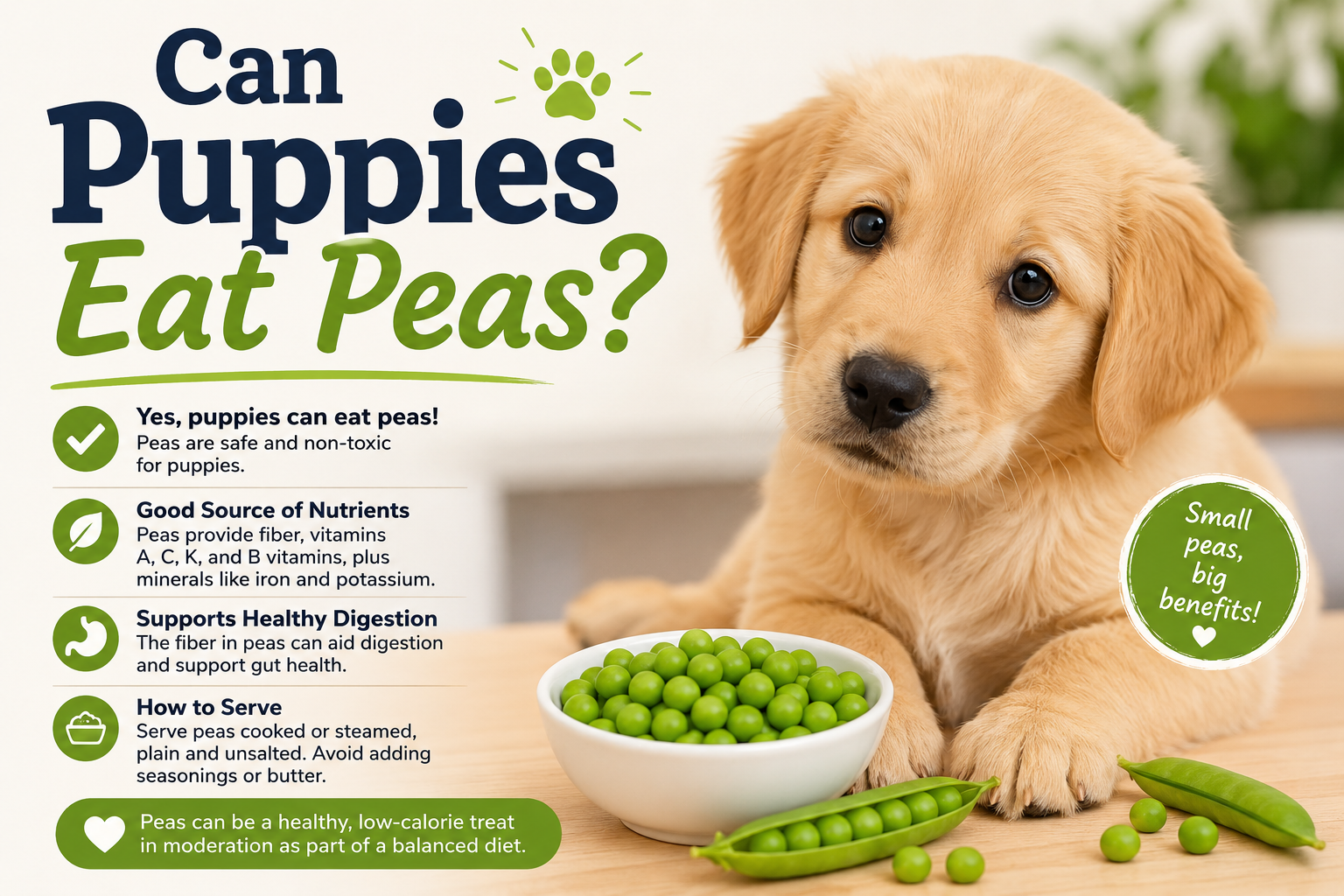
Can puppies eat peas? Learn benefits, risks, nutrition, serving tips, and safety guidelines for feeding peas to puppies in a healthy, balanced diet guide.
Peas are small green legumes that belong to the plant family used widely in human diets. They are soft, naturally sweet, and packed with nutrients. In dog food, peas often appear in dry kibble, wet food, and treats.
The most common types include:
- Green peas
- Sweet peas
- Frozen peas
- Split peas
When we talk about feeding puppies, we are usually referring to plain cooked or thawed peas, not processed pea-based ingredients.
Peas are widely used in pet nutrition because they contain fiber, protein, vitamins, and minerals that support growth and digestion.
Can Puppies Eat Peas
Yes, puppies can eat peas. Peas are safe when given in small amounts and properly prepared. They provide fiber, vitamins, and minerals that support digestion and growth. Serve plain, cooked, or thawed peas without salt or seasoning. Avoid overfeeding, as too many peas may cause gas or stomach upset in young puppies.
Nutritional Value of Peas for Puppies
1. Protein for growth
Peas provide plant-based protein that supports muscle development in puppies. This protein works alongside meat sources to help build strong tissues, healthy growth, and overall physical development during early life stages.
2. Fiber for digestion
Peas contain dietary fiber that helps improve digestion in puppies. It supports smooth bowel movements, reduces constipation risk, and promotes a healthy gut system, ensuring better nutrient absorption and digestive balance overall.
3. Vitamins for immunity
Peas offer essential vitamins like A, K, and B group vitamins. Vitamin A supports vision health, vitamin K aids blood clotting, and B vitamins help energy production and overall immune strength.
4. Minerals for development
Peas contain important minerals such as iron, magnesium, and potassium. These nutrients support strong bones, healthy heart function, proper muscle activity, and steady energy levels for growing and active puppies daily.
5. Antioxidants
Peas are rich in antioxidants that help protect puppy cells from damage. They support immune defense, reduce inflammation, and promote overall health by fighting free radicals and improving long-term wellness naturally.
Benefits of Feeding Peas to Puppies
1. Improved digestion
Peas contain fiber that supports healthy digestion in puppies. It helps regulate bowel movements, improves gut function, and promotes smoother nutrient absorption, keeping the digestive system balanced and comfortable overall.
2. Weight management support
Peas are low in calories and can help manage a puppy’s weight. They provide fullness without excess fat, making them useful for preventing overeating and supporting a healthy body condition.
3. Natural energy source
Peas provide carbohydrates that release energy slowly over time. This helps active puppies stay energetic, playful, and strong throughout the day while maintaining stable energy levels without sudden spikes.
4. Healthy coat and skin
Peas contain vitamins like A and antioxidants that support skin health. They help improve coat shine, reduce dryness, and promote overall skin condition, keeping puppies looking healthy and well-nourished.
5. Training treat alternative
Small portions of peas can be used as healthy training treats. They are low-calorie, easy to digest, and provide a safe reward option without adding unnecessary fat or unhealthy ingredients.
Risks of Feeding Peas to Puppies
1. Gas and bloating
Feeding too many peas can cause gas and bloating in puppies. The fiber ferments in the stomach, leading to discomfort, digestive imbalance, and occasional stomach swelling or mild pain.
2. Diarrhea
Introducing peas too quickly or in large amounts may cause diarrhea. Puppies have sensitive stomachs, and sudden high fiber intake can disrupt digestion and lead to loose or frequent stools.
3. Nutritional imbalance
Peas should not replace meat-based puppy food. Overfeeding can reduce essential nutrient intake, leading to an imbalance in protein, vitamins, and minerals required for proper growth and healthy development.
4. Allergic reactions (rare)
Some puppies may experience mild allergies to peas. Symptoms can include itching, skin irritation, or stomach upset, although such reactions are uncommon and usually mild in nature overall.
5. Processed pea ingredients
Excess pea protein or pea starch in processed dog food may affect diet balance. Overuse is debated in veterinary nutrition and should be monitored to maintain healthy long-term feeding practices.
Best Way to Serve Peas to Puppies
Step 1: Wash thoroughly
Always wash peas properly under clean running water before serving. This removes dirt, chemicals, and pesticide residues, ensuring the peas are safe and healthy for your puppy’s consumption.
Step 2: Cook lightly
Steam or boil peas without adding salt, oil, or spices. Light cooking makes peas softer, easier to digest, and safer for puppies while preserving most of their natural nutrients.
Step 3: Mash slightly (for young puppies)
For very young puppies, lightly mash cooked peas to make them easier to chew and digest. This reduces choking risk and supports better absorption of nutrients in their developing stomach.
Step 4: Mix with regular food
Combine small amounts of cooked peas with your puppy’s normal kibble or wet food. This improves taste, adds nutrition, and helps puppies adjust easily to new food ingredients.
Step 5: Start small
Introduce peas slowly in small portions. Observe your puppy for any digestive changes or allergies. Gradual introduction helps prevent stomach upset and ensures safe long-term feeding.
Signs Your Puppy Tolerates Peas Well
If peas suit your puppy, you will notice:
- Normal stool
- Good energy
- No vomiting
- No bloating
- Healthy appetite
If any digestive issues appear, stop feeding peas immediately.
When Should Puppies Avoid Peas?
Avoid or limit peas in these cases:
- Puppies with sensitive stomachs
- Dogs with frequent gas issues
- Puppies on restricted veterinary diets
- Known legume allergies
- Puppies under very early weaning stage
Always consult a vet if unsure.
Peas in Commercial Puppy Food
Many dog food brands include peas:
- Fiber source
- Carbohydrate filler
- Plant protein source
While moderate inclusion is fine, some formulas use high pea content as a replacement for grains or meat.
Veterinarians recommend balanced formulas where peas are part of the diet, not the main ingredient.
Common Myths About Puppies and Peas
Peas are often misunderstood in puppy diets. They are safe in moderation, and puppies can digest cooked peas easily. Fresh peas do not cause heart disease in small amounts. Vegetables are also useful because they provide fiber, vitamins, and important micronutrients that support overall puppy health and digestion.
Conclusion
Peas can be a healthy addition to a puppy’s diet when served in moderation and properly. They support digestion, growth, and immunity, but should never replace balanced puppy food. Careful portion control ensures benefits while avoiding gas, diarrhea, or nutritional imbalance in growing puppies.