Can cats eat rice? Learn when rice is safe for cats, its benefits, risks, and how to serve it properly alongside protein for healthy feline nutrition.
Rice is a cereal grain and a staple food for over half the world’s population. It comes in varieties like white, brown, basmati, and jasmine. Rich in carbohydrates, it provides energy, some vitamins, and minerals. Rice is gluten-free, versatile, and used in cooking, baking, and animal feed.
Understanding a Cat’s Nutritional Needs
Cats have very specific dietary requirements. Unlike dogs and humans, they cannot thrive on carbohydrates alone. Their bodies require:
- High-quality proteins: Essential for growth, energy, and muscle maintenance. Meat and fish are primary sources.
- Taurine: An amino acid crucial for heart function, vision, and reproduction.
- Fats: Provide energy and help absorb fat-soluble vitamins.
- Vitamins and minerals: Cats need vitamins A, D, E, and minerals like calcium and phosphorus.
While cats can digest some carbohydrates, their system is not designed for a carb-heavy diet. This makes rice an optional, not essential, part of their nutrition.
Can Cats Eat Rice?
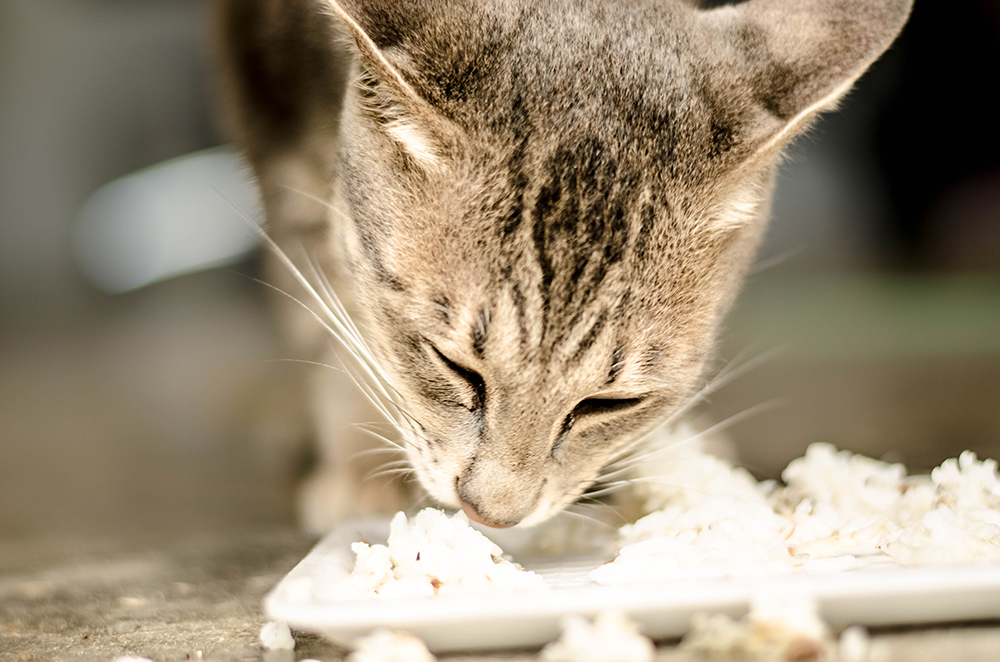
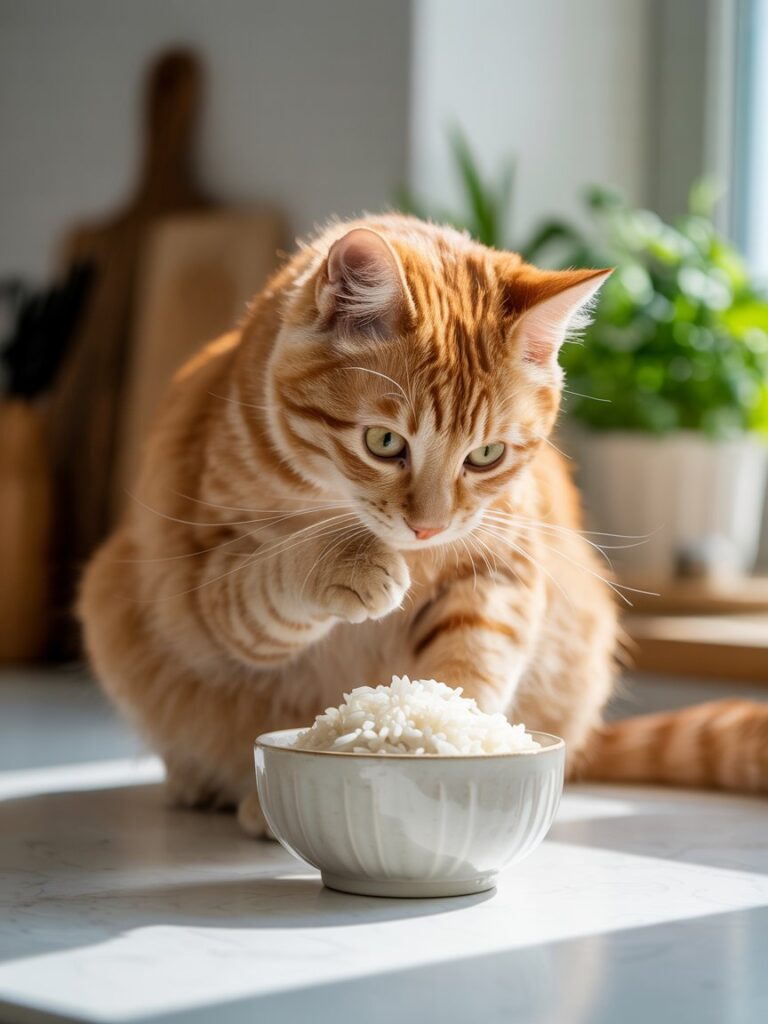
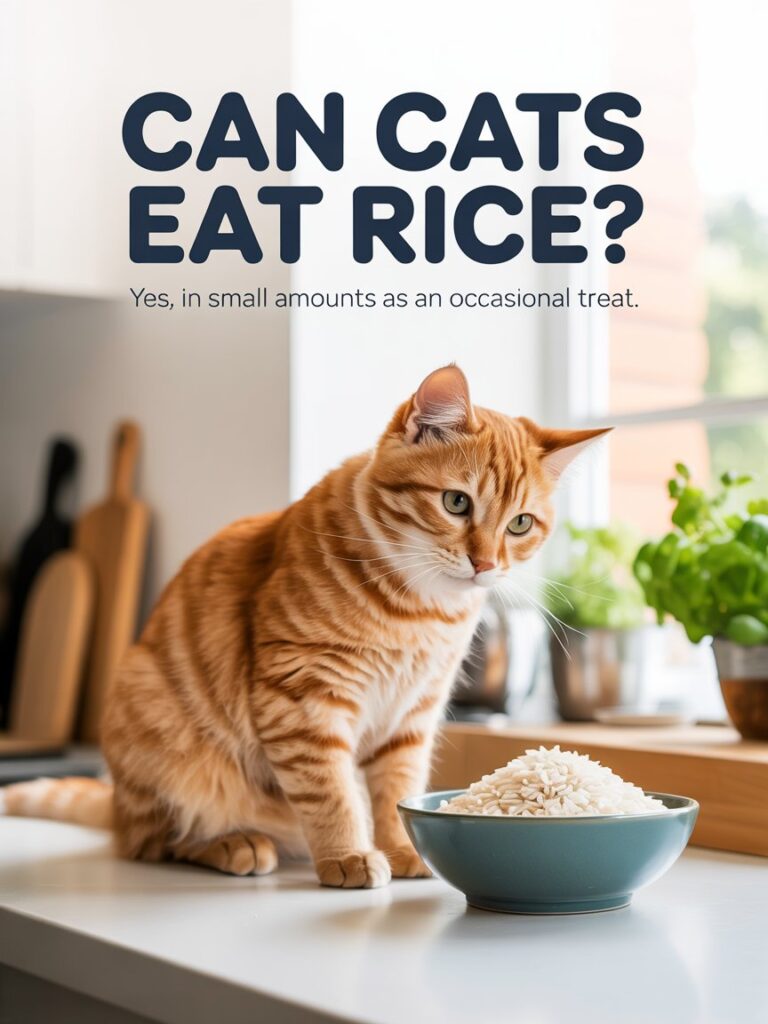
Yes, cats can eat rice in small amounts, but it should be plain and fully cooked. Rice is safe as an occasional treat or digestive aid, but it lacks essential nutrients, so it should never replace a protein-rich, meat-based diet for cats.
Types of Rice Safe for Cats
Brown Rice
Brown rice is more nutritious than white rice, containing fiber and some vitamins. It is slightly harder to digest, so give small portions to avoid digestive discomfort.
White Rice
White rice is easily digestible and gentle on a cat’s stomach. It’s commonly used to soothe digestive issues like diarrhea or mild gastrointestinal upset in cats.
Rice Cakes
Plain, unsalted rice cakes can be offered in very small amounts as an occasional treat. Avoid flavored or sweetened varieties, which may harm cats.
Perks of Feeding Rice to Cats
Helps with Digestion
Plain, cooked rice can soothe a cat’s upset stomach, helping to bind loose stools and support digestive health during mild diarrhea or gastrointestinal discomfort.
Gentle on Sensitive Stomachs
Rice is bland and easily digestible, making it suitable for cats with sensitive stomachs or those recovering from illness, as it minimizes irritation and supports nutrient absorption.
Provides Quick Energy
Rice contains carbohydrates that can offer a short-term energy boost for active cats, supplementing their protein-rich diet without overwhelming their digestive system when given in moderation.
Cons of Feeding Rice to Cats
Poor Protein Source
Rice lacks the essential proteins, amino acids, and taurine that cats need, making it an inadequate substitute for meat in their obligate carnivore diet.
Digestive Discomfort
Feeding too much rice can cause bloating, constipation, or diarrhea in cats, especially if they are not used to digesting carbohydrates.
Can Cause Weight Gain
Excess rice adds unnecessary carbohydrates and calories, which may contribute to obesity, especially in indoor or less active cats.
When is rice bad for cats?
1. Some cats are sensitive to eating new foods
Introducing rice to a cat’s diet can cause digestive upset in sensitive cats, including vomiting, diarrhea, or stomach discomfort if their system isn’t accustomed to new foods.
2. Too much rice is bad for cats
Overfeeding rice displaces essential nutrients like protein and taurine, leading to an unbalanced diet and potential health issues, including digestive problems and nutritional deficiencies over time.
3. Cats should never eat uncooked rice
Uncooked rice is hard to digest and may expand in a cat’s stomach, potentially causing bloating, gastrointestinal blockage, or discomfort. Always serve rice fully cooked.
4. If you give your cat rice, be sure it’s plain
Rice seasoned with salt, spices, oil, or butter can be harmful to cats, potentially causing digestive upset, toxicity, or long-term health issues. Always serve plain, boiled rice.
5. The carbs in rice can lead to obesity in cats
Rice is high in carbohydrates, which cats don’t need in large amounts. Excessive consumption may contribute to weight gain, obesity, and associated health problems, especially in indoor or less active cats.
Why You Might Give Rice to Your Cat
There are several situations where rice can be a safe addition to a cat’s diet:
1. Digestive Health Support
Cats sometimes suffer from diarrhea or stomach upset. Plain, cooked rice mixed with lean meat can help firm stools and calm the digestive system.
2. Weight Management
Rice is low in fat but high in carbohydrates. In small amounts, it can bulk up meals for overweight cats when combined with protein, creating lower-calorie meals.
3. As a Filler in Homemade Cat Food
Some pet owners prepare homemade cat food. Adding rice in moderation can make the meal more filling without adding harmful ingredients.
4. Emergency Feeding
If your cat refuses commercial food temporarily, plain rice with boiled chicken can provide temporary sustenance, but should not replace regular cat food for long.
How to Serve Rice Safely to Cats
If you want to give your cat rice, follow these guidelines:
Step 1: Cook the Rice Properly
- Boil the rice in water until soft.
- Avoid using salt, oil, butter, or seasonings.
Step 2: Portion Size
- A teaspoon to a tablespoon of cooked rice is sufficient for one meal.
- Too much rice can lead to digestive problems or obesity.
Step 3: Mix with Protein
- Combine rice with boiled chicken, turkey, or fish.
- Cats require protein, so rice alone is not suitable.
Step 4: Introduce Slowly
- Give a small portion first and watch for allergic reactions or digestive upset.
- Some cats may have sensitive stomachs.
Homemade Cat Food Recipes with Rice
If you want to try rice at home, here are a few safe recipes:
1. Chicken and Rice Meal
- 1/4 cup cooked rice
- 1/4 cup boiled, shredded chicken
- Mix thoroughly and serve lukewarm.
2. Fish and Rice
- 1/4 cup cooked rice
- 1/4 cup steamed white fish (boneless)
- Optional: a small pinch of plain pumpkin for fiber
3. Rice with Pumpkin for Digestive Support
- 1/4 cup cooked rice
- 1 tablespoon pure pumpkin puree
- Serve as a temporary meal for diarrhea
Conclusion
Cats can safely eat plain, cooked rice in small amounts as an occasional treat or digestive aid. However, rice lacks essential nutrients, so it should never replace a protein-rich diet. Always serve it plain, properly cooked, and mixed with meat for balanced nutrition.