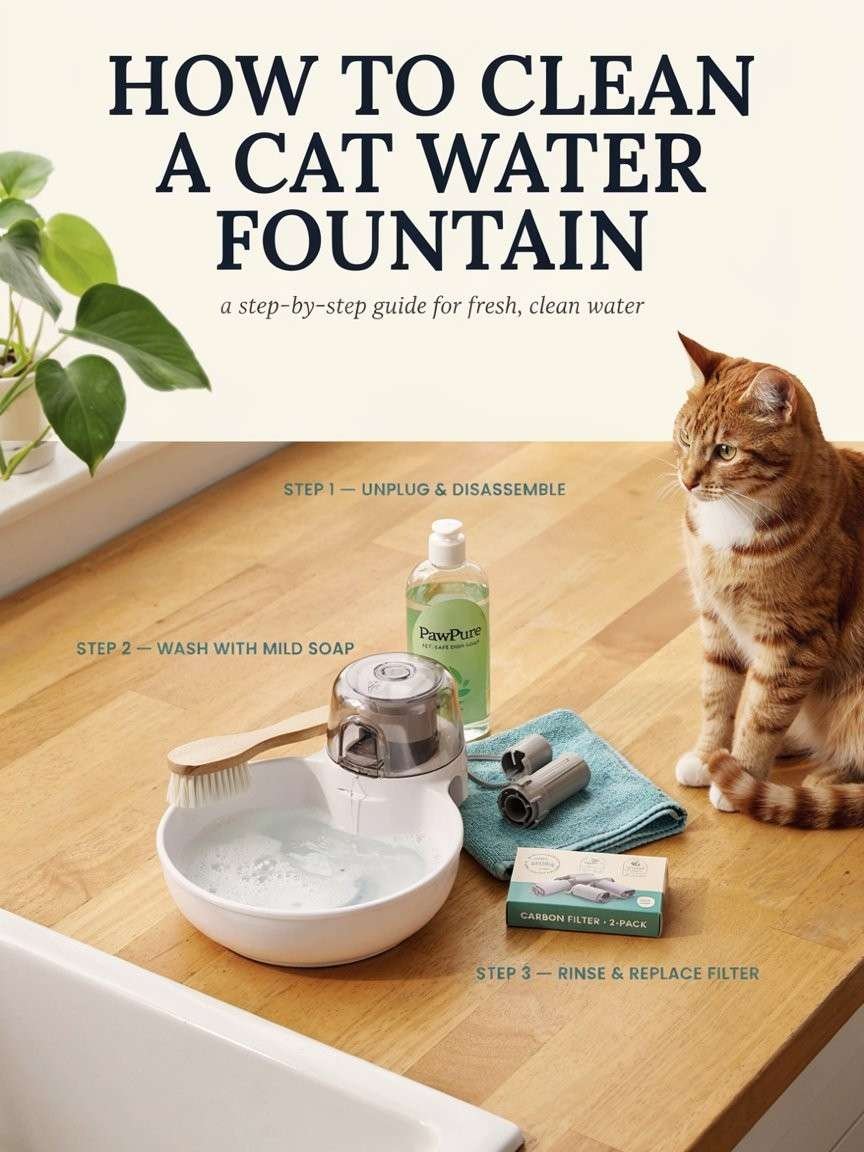
Learn how to clean a cat water fountain in 7 simple steps. Remove bacteria, slime, and buildup to keep your cat’s drinking water fresh and safe daily.
What Is Cleaning a Cat Water Fountain?
Cleaning a cat water fountain is the process of removing dirt, pet hair, food particles, bacteria, slime, and mineral buildup from the fountain’s bowl, pump, filter, and other components. Regular cleaning keeps the water fresh, improves the fountain’s performance, prevents mold and unpleasant odors, and helps ensure your cat always has access to safe, clean drinking water.
Types of Cat Water Fountains
Ceramic Cat Water Fountains
Ceramic cat water fountains are attractive, durable, and naturally resistant to scratches. Their smooth, non-porous surface makes cleaning easier and helps reduce bacterial buildup when maintained regularly.
Pros
Ceramic fountains resist scratches, stay cooler than plastic, are easy to sanitize, reduce odor absorption, and provide a stylish appearance that blends well with home décor while encouraging cats to drink.
Cons
Ceramic fountains are heavier, more expensive, and can crack or chip if dropped. Replacement parts may also be harder to find compared to plastic or stainless steel models.
Stainless Steel Water Fountains
Stainless steel water fountains are highly durable, hygienic, and popular among pet owners. They resist rust, stains, and bacteria, making them an excellent choice for long-term daily use.
Pros
Stainless steel is easy to clean, dishwasher-safe in many models, resistant to bacteria, highly durable, odor-resistant, and suitable for cats with sensitive skin or plastic-related allergies.
Cons
Stainless steel fountains usually cost more than plastic versions, may show water spots or fingerprints, and some designs can produce slightly more pump noise during operation.
Plastic Pet Water Fountain
Plastic pet water fountains are lightweight, affordable, and available in many sizes and designs. They are ideal for first-time pet owners looking for a budget-friendly hydration solution.
Pros
Plastic fountains are inexpensive, lightweight, widely available, easy to assemble, and come in numerous styles. Many include replaceable filters and convenient features for everyday household use.
Cons
Plastic can develop scratches that trap bacteria over time, may absorb odors, discolor with prolonged use, and occasionally cause skin irritation or feline acne in sensitive cats.
Why Cleaning Your Cat’s Water Fountain Is Important
A cat water fountain constantly circulates water, but it doesn’t clean itself. Hair, food particles, saliva, dust, and minerals accumulate over time.
Regular cleaning helps:
- Prevent bacterial growth
- Remove biofilm and slime
- Eliminate mold
- Improve water quality
- Extend the fountain’s lifespan
- Keep the pump working efficiently
- Encourage your cat to drink more water
A clean fountain also reduces unpleasant odors and improves your cat’s overall hydration.
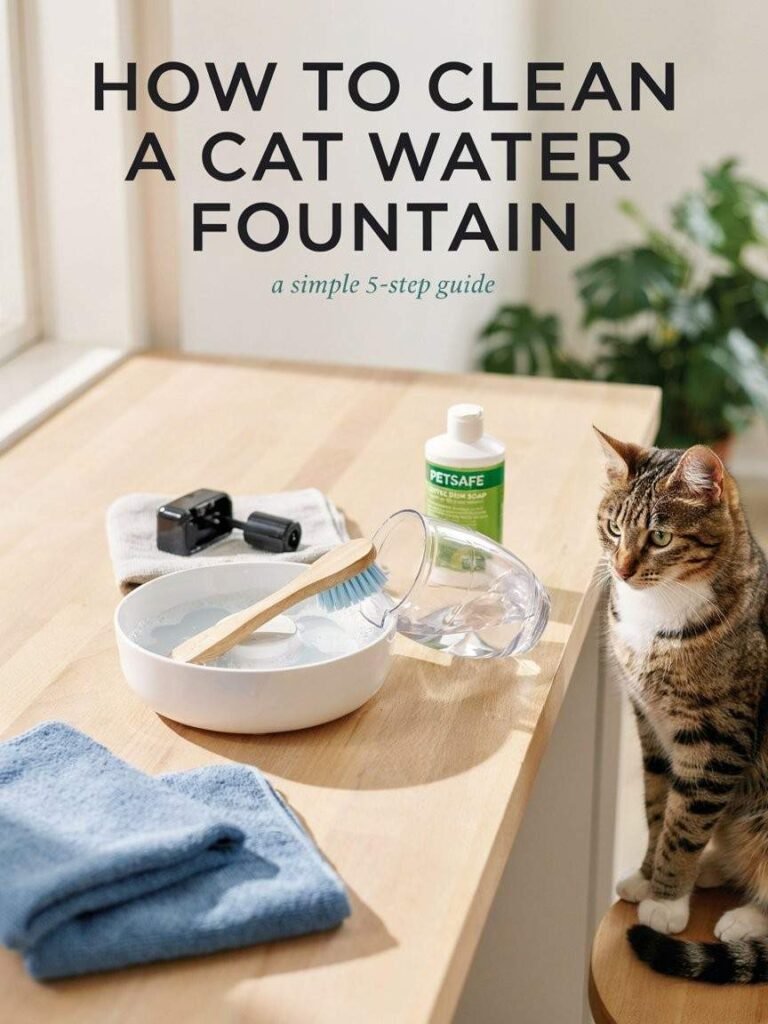
How to Clean a Cat Water Fountain?
1. Give Your Cats a Temporary Water Source
Before cleaning the fountain, place a clean bowl of fresh water where your cat can easily reach it. This keeps your pet hydrated while the fountain is disassembled, cleaned, dried, and prepared for safe use again.
2. Gather Necessary Instructions & Materials
Read the manufacturer’s cleaning instructions and collect everything you’ll need, including mild dish soap, warm water, a soft sponge, a small brush, white vinegar, a clean towel, and replacement filters if required for maintenance.
3. Unplug and Empty
Turn off and unplug the water fountain before cleaning to prevent electrical hazards. Pour out the remaining water completely, then wipe away loose debris, pet hair, and food particles before taking the fountain apart.
4. Remove the Main Tank
Carefully detach the main water tank and any removable parts, such as the lid, spout, and filter housing. Separating these components allows you to clean every surface thoroughly and remove hidden dirt or biofilm.
5. Disassemble Motor
Open the pump housing according to the manufacturer’s instructions and remove the impeller and other detachable components. This helps eliminate trapped hair, mineral deposits, and debris that can reduce water flow and pump performance.
6. Clean Motor Chamber
Use a small brush or cotton swab with warm, soapy water to gently scrub the motor chamber and pump parts. Remove slime, dirt, and buildup, then rinse thoroughly to ensure smooth, quiet operation after reassembly.
7. Toss It in the Dishwasher
If the manufacturer confirms that the fountain parts are dishwasher-safe, place the non-electrical components on the top rack for convenient cleaning. Never put the pump, power cord, filters, or other electrical parts in the dishwasher.
Benefits of a Clean Cat Water Fountain
A clean cat water fountain provides fresh, safe drinking water that encourages your cat to stay hydrated. Regular cleaning reduces bacteria, mold, slime, and unpleasant odors while improving water quality. It also extends the fountain’s lifespan, keeps the pump working efficiently, and supports your cat’s overall health, especially kidney and urinary function.
How Often Should You Clean a Cat Water Fountain?
Cleaning frequency depends on the number of cats and the fountain type.
| Cleaning Task | Recommended Frequency |
| Change water | Every day |
| Rinse bowl | Every 2–3 days |
| Deep-clean the fountain | Every week |
| Replace filter | Every 2–4 weeks |
| Replace the pump sponge | Every month |
| Full maintenance | Monthly |
If you have multiple cats, clean the fountain more frequently.
Signs Your Cat Fountain Needs Cleaning
Watch for:
- Slimy surfaces
- Cloudy water
- Strange odor
- Slow water flow
- Loud pump
- Visible mold
- Hair buildup
- White mineral deposits
Clean immediately if you notice these signs.
Tips to Keep Your Cat’s Water Fountain Cleaner Longer
Follow these habits:
- Change water daily.
- Rinse the bowl often.
- Brush away visible hair.
- Keep the fountain away from food bowls.
- Replace filters regularly.
- Use filtered water.
- Clean the pump weekly.
- Wash all parts every week.
FAQs
Can I use vinegar to clean a cat water fountain?
Yes. White vinegar safely removes mineral deposits and hard water stains. Rinse thoroughly afterward to remove any remaining vinegar smell.
Is dish soap safe for cleaning a cat water fountain?
Yes, mild unscented dish soap is safe. Rinse every part completely to ensure no soap residue remains before refilling the fountain.
What should I avoid when cleaning a cat fountain?
Avoid bleach, harsh chemicals, scented cleaners, abrasive scrubbers, and leaving soap residue, as these can harm your cat or damage the fountain.
Can a dirty cat water fountain make my cat sick?
Yes. Dirty fountains can harbor bacteria, mold, and biofilm, increasing the risk of illness and discouraging your cat from drinking enough water.
Conclusion
Regularly cleaning your cat’s water fountain helps provide fresh, safe drinking water while preventing bacteria, slime, mold, and mineral buildup. Following these seven simple steps keeps the fountain working efficiently, extends its lifespan, and encourages healthy hydration. A clean fountain supports your cat’s overall health, comfort, and daily water intake for years.