Discover the best indoor cat enrichment ideas to keep your cat active, mentally stimulated, healthy, and happy with toys, climbing, play, and puzzles daily.
Introduction of Indoor Cat Enrichment Ideas
Indoor cats live longer and are generally safer than outdoor cats, but they also need regular mental and physical stimulation. Without enough enrichment, indoor cats can become bored, overweight, anxious, or develop destructive behaviors. Fortunately, there are many easy ways to create a stimulating environment that keeps your cat entertained every day.
Why Indoor Cat Enrichment Matters
Domestic cats retain the instincts of their wild ancestors, even after thousands of years of domestication. In the wild, a cat spends the majority of its waking hours stalking, chasing, and capturing prey. An indoor cat with a food bowl and a couch has no outlet for that instinct, and that unmet need shows up as behavior problems.
Veterinary behaviorists consistently link poor enrichment to:
- Obesity and related health issues (diabetes, joint problems, reduced lifespan)
- Stress-related illness, including feline idiopathic cystitis
- Destructive behavior, like scratching furniture or knocking items over
- Aggression, toward people or other pets in the home
- Anxiety and depression-like withdrawal
Enrichment isn’t a luxury; it’s a core part of responsible indoor cat care, alongside nutrition and veterinary checkups.
Why Indoor Cats Need Enrichment
Cats naturally spend much of their day hunting, climbing, and exploring. Indoor environments can limit these opportunities unless owners intentionally provide stimulating activities.
Benefits include:
- Reduces boredom
- Prevents obesity
- Supports healthy muscles
- Improves mental stimulation
- Reduces destructive scratching
- Helps prevent anxiety
- Builds confidence
- Encourages natural hunting behavior
- Strengthens the bond between owner and cat
- Improves overall quality of life
Best Indoor Cat Enrichment Ideas
1. Interactive Toys and Puzzle Feeders
Interactive toys and puzzle feeders keep your indoor cat mentally engaged while encouraging problem-solving and natural hunting instincts. They also slow down eating, reduce boredom, provide daily exercise, and make mealtime more rewarding and entertaining.
2. Create Vertical Space
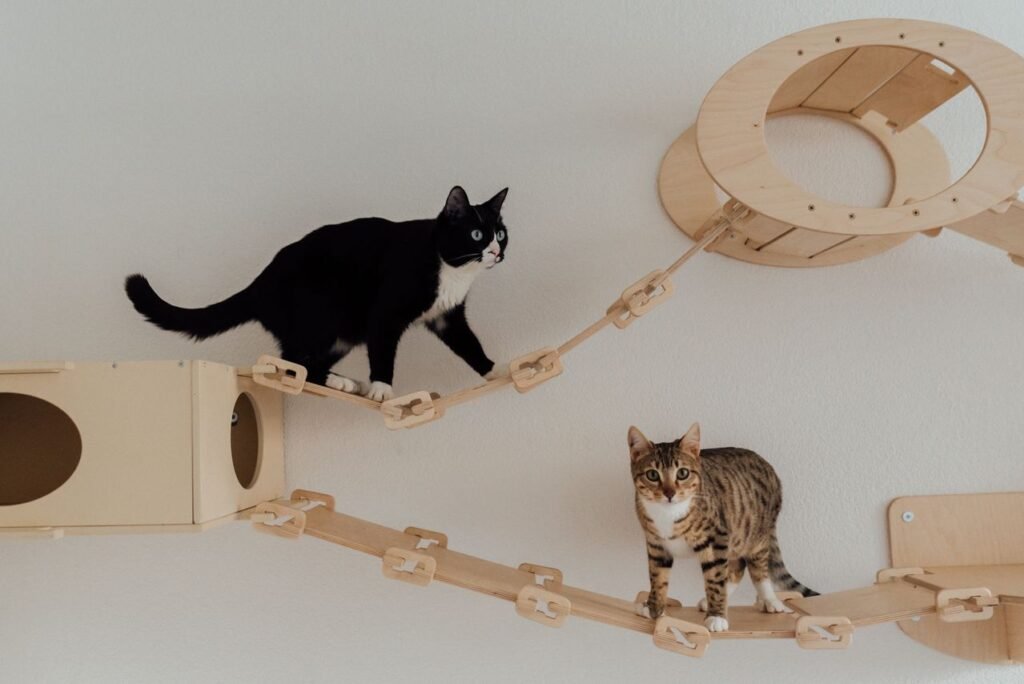
Cats naturally love climbing and observing their surroundings from above. Install cat trees, wall shelves, window perches, or climbing towers to increase their territory, promote exercise, improve confidence, and provide safe places to rest and explore.
3. Hiding Spots and Tunnels
Provide cardboard boxes, covered beds, cat caves, and play tunnels where your cat can hide, nap, or ambush toys. These safe spaces reduce stress, satisfy instincts, and encourage active exploration throughout the home every day.
4. Encourage Natural Hunting Behaviors
Stimulate your cat’s hunting instincts by hiding treats, using feather wands, toy mice, and food puzzles. These activities mimic chasing prey, keep your cat mentally active, build confidence, and prevent boredom-related behavioral problems.
5. Daily Play Sessions
Schedule two or three interactive play sessions lasting 10 to 15 minutes each day. Regular play helps burn energy, maintain a healthy weight, strengthen muscles, reduce stress, and build a stronger bond between you and your cat.
6. Cat-Safe Plants and Sensory Enrichment
Grow cat grass or other cat-safe plants to provide safe chewing opportunities and sensory stimulation. Combine this with window views, birdwatching, and different textures to create a more interesting and enriching indoor environment.
7. Training and Mental Challenges
Teach your cat simple tricks such as sitting, spinning, or coming when called using positive reinforcement. Short training sessions improve mental stimulation, strengthen communication, build confidence, and provide rewarding challenges for curious indoor cats.
8. Use of Technology
Technology can enhance enrichment through automatic laser toys, motion-activated toys, pet cameras with treat dispensers, and cat-friendly videos featuring birds or fish. Always supervise use and balance technology with regular human interaction.
9. Rotate Enrichment Options
Avoid leaving the same toys and activities available all the time. Rotate toys, scratching posts, puzzles, and climbing accessories every week to maintain curiosity, prevent boredom, and keep your indoor cat excited about playtime.
Signs Your Enrichment Plan Is Working
You’ll typically notice improvement within a few weeks of consistent enrichment:
- More relaxed body language (slow blinking, loose tail, relaxed ears)
- Reduced destructive scratching on furniture
- Improved appetite and more consistent litter box use
- Increased play engagement and curiosity
- Better sleep patterns and reduced nighttime activity/vocalization
Common Indoor Cat Enrichment Mistakes
Avoid these common errors:
- Leaving the same toys out all year
- Skipping daily play
- Ignoring vertical space
- Feeding only from bowls
- Providing too few scratching posts
- Overusing laser pointers without allowing a “catch”
- Not rotating enrichment activities
- Using unsafe household items
Small changes can make a significant difference.
Benefits of Indoor Cat Enrichment
Indoor cat enrichment improves both physical and mental well-being by encouraging exercise, reducing boredom, and satisfying instincts like hunting, climbing, and exploring. It helps prevent obesity, anxiety, destructive behaviors, and stress while promoting confidence, better sleep, healthy brain function, and a stronger bond between cats and their owners.
FAQs
How much playtime does an indoor cat need?
Most healthy adult cats benefit from 20 to 40 minutes of interactive play each day, divided into two or three shorter sessions.
Can indoor cats become depressed?
Yes. A lack of stimulation can lead to boredom, stress, reduced activity, overeating, excessive grooming, or changes in behavior. Daily enrichment helps support emotional well-being.
Are puzzle feeders good for cats?
Yes. Puzzle feeders encourage natural hunting behaviors, slow eating, provide mental exercise, and help reduce boredom while making mealtimes more engaging.
Do indoor cats need climbing furniture?
Yes. Cats naturally enjoy climbing and observing their surroundings from high places. Cat trees, shelves, and window perches provide exercise, confidence, and environmental enrichment.
How often should I rotate cat toys?
Rotate toys every one to two weeks. Keeping only a few toys available at a time makes them feel new and maintains your cat’s interest.
Conclusion
Indoor cat enrichment is essential for your cat’s physical health, mental stimulation, and emotional well-being. By providing interactive toys, climbing spaces, puzzle feeders, daily play, and sensory experiences, you can prevent boredom and encourage natural behaviors. A stimulating indoor environment helps your cat stay active, confident, healthy, and happy while strengthening the bond you share.